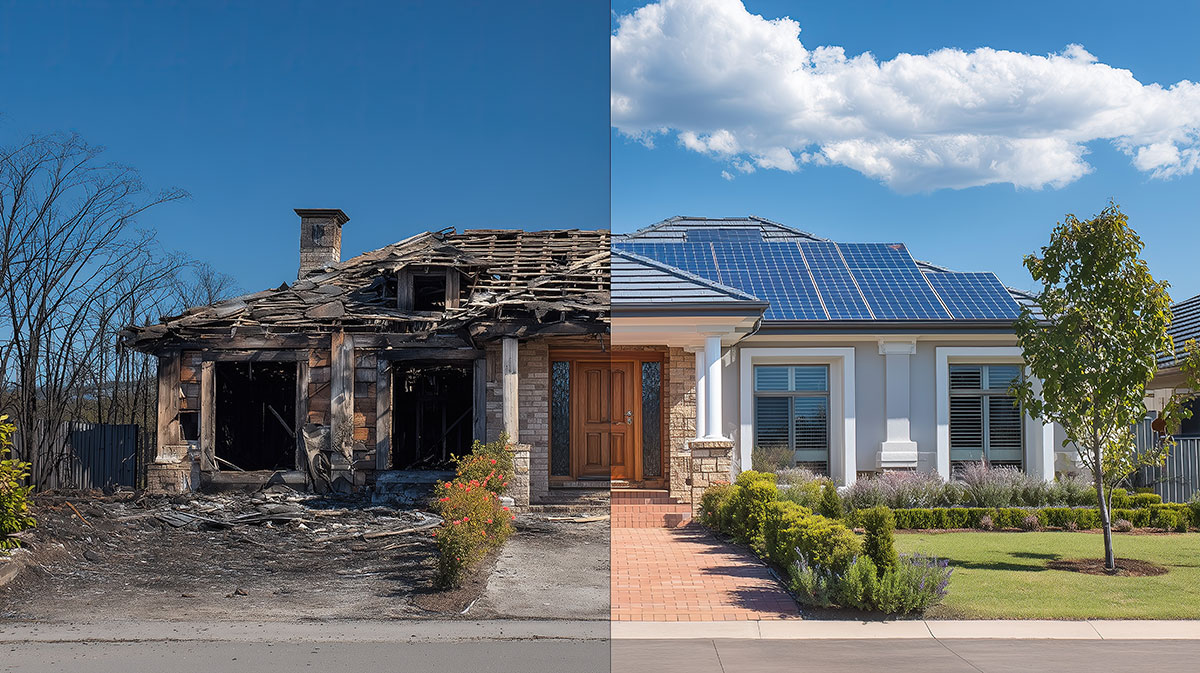
When people think about restoration, they usually picture crews arriving with equipment, tearing out damaged materials, setting up drying systems, or beginning repairs. That is the visible part of the process. It is what people remember because they can see progress happening.
But in my experience, the most important work often happens before any of that begins.
I’ve spent more than two decades in insurance, restoration, and consulting, and if there is one lesson that has stayed with me, it is this: rushing into repairs without fully understanding the loss usually creates more problems than it solves.
People are often surprised when I say that some of the most valuable hours on a project are spent walking the property, taking notes, asking questions, and sometimes just standing quietly and looking around.
The First Walkthrough Tells You More Than You Think
Every loss has a story.
You can usually tell a lot before anyone says a word. Sometimes it’s obvious. A burned section of a building or standing water across a warehouse floor tells you where to start looking. Other times it is more subtle. Maybe there is a faint smoke odor in a room that appears untouched. Maybe the water line on the wall doesn’t match the damage someone expected to find.
I’ve learned not to assume anything during that first walkthrough.
Years ago, I probably walked into a building thinking I already knew what I was going to find. Experience has changed that. Now I ask myself a different question.
“What am I missing?”
That simple question slows me down just enough to notice things I might have overlooked otherwise.
Documentation Is More Than Taking Pictures
People sometimes think documentation is just taking photographs for the file.
It is much more than that.
The photos matter, of course, but they only tell part of the story. Good documentation explains what happened, where the damage originated, how far it spread, and what conditions existed before anyone started removing materials.
I’ve learned that the notes I take on the first day often become some of the most valuable information months later.
Projects have a way of changing over time. New information comes up. Additional damage is discovered. Different contractors become involved. People remember conversations differently.
The documentation becomes the constant.
I have never regretted taking too many notes. I have regretted not writing something down.
Asking the Right Questions
One thing experience teaches you is that the building does not always have all the answers.
The people do.
I spend a lot of time talking with facility managers, maintenance staff, business owners, and sometimes employees who happened to be there when the loss occurred.
Everyone notices something different.
One person remembers hearing a pipe burst overnight. Another remembers an unusual smell several days earlier. Someone else recalls a roof repair completed a month before the storm.
None of those details seem important on their own.
Together, they often explain the entire loss.
I’ve found that asking good questions is usually more valuable than having quick answers.
Planning Saves Time Later
One thing I’ve noticed over the years is that people naturally want action.
After a disaster, everyone wants to see something happening. That is understandable. Businesses want to reopen. Property owners want repairs started. Insurance carriers need information.
Sometimes there is pressure to move immediately.
I understand that urgency because I’ve worked on every side of the industry. I started as a claims adjuster before moving into restoration and later consulting.
But I’ve also seen what happens when planning gets skipped.
Crews may end up doing work twice. Materials that should have been saved get removed. Repair scopes change repeatedly because no one fully understood the damage in the beginning.
Ironically, slowing down for a few hours at the start often speeds the entire project up.
Every Building Has Its Own Challenges
No two losses are exactly alike.
I’ve worked on hospitals, courthouses, schools, warehouses, sports facilities, and office buildings. They all have different priorities.
A flooded warehouse creates one set of problems.
A flooded hospital creates another.
In a hospital, you are thinking about patient care, infection control, critical equipment, and occupied spaces. In a school, you may be working around students and academic schedules. A courthouse has security concerns. A manufacturing facility may be focused on keeping production running.
The damage itself is only part of the equation.
Understanding how the building functions is just as important as understanding what happened to it.
Objectivity Is Harder Than It Sounds
One thing I remind myself on every assignment is that my job is not to prove anyone right or wrong.
It is to understand what actually happened.
That sounds simple, but it takes discipline.
Everyone involved usually has their own perspective. Contractors have one view. Owners have another. Insurance representatives may see things differently.
My responsibility is to evaluate the facts as objectively as possible.
Sometimes that means agreeing with someone. Sometimes it means asking uncomfortable questions.
Either way, the goal stays the same.
The work should match the damage.
Experience Changes How You Look at a Loss
People sometimes ask whether the work gets easier after doing it for so many years.
In some ways, yes.
You recognize patterns more quickly. You notice warning signs sooner. You become more confident making difficult decisions.
But experience also makes you more cautious.
I’ve seen enough projects take unexpected turns that I no longer assume the first explanation is always the correct one.
Instead, I try to stay curious.
I still ask questions.
I still walk every room.
I still double-check measurements.
That habit has probably saved me from making more mistakes than anything else.
Good Restoration Starts Long Before Repairs
The public usually sees restoration when equipment arrives or walls start coming down.
What they don’t see are the conversations, inspections, measurements, documentation, planning sessions, and careful evaluations that happen first.
That work is not particularly exciting.
It doesn’t make for dramatic photographs.
But it lays the foundation for everything that follows.
I’ve come to believe that successful restoration projects are rarely successful because someone worked faster than everyone else.
They’re successful because someone took the time to understand the loss before trying to fix it.
After more than 24 years in this industry, that is probably the biggest lesson I’ve learned.
Good restoration doesn’t begin with demolition.
It begins with paying attention.