If you have spent enough time around construction and restoration projects, you have probably heard someone say, “That’s not in the scope.”
Sometimes it is exactly the right answer. A contractor is hired to perform specific work, the owner approves a particular scope, and everyone needs to understand where those responsibilities begin and end. Without those boundaries, projects can become difficult to manage, both financially and operationally.
I have worked in insurance, restoration, and consulting for more than 24 years, and I understand why defining the scope matters. I have also learned that identifying something as outside the scope does not necessarily mean the conversation is finished.
Sometimes a condition discovered during construction genuinely has nothing to do with the work being performed. Other times, it falls outside the agreed-upon scope but still affects how the project should proceed. Recognizing the difference requires judgment, and I don’t think the answer is always as obvious as people would like.
The Scope Is a Starting Point, Not a Description of Everything in the Building
Before work begins, a project needs a defined scope. It establishes what is being repaired, replaced, installed, or otherwise addressed. It also helps the owner understand what they are paying for and gives the contractor a basis for planning the work.
On restoration projects, that scope may be developed from an assessment of the damage, available documentation, and conditions that can reasonably be observed before work begins.
The challenge is that existing buildings do not always reveal everything upfront.
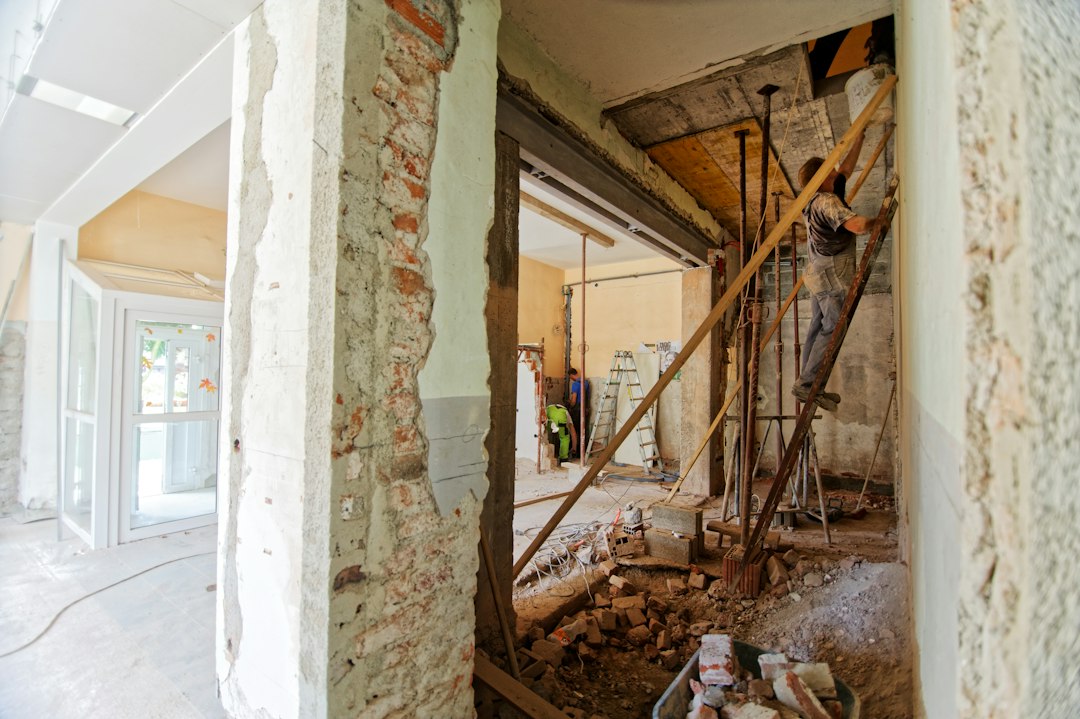
Once demolition starts, you may discover previous repairs, unexpected materials, concealed damage, or construction that differs from the available drawings. Some discoveries are directly related to the loss being restored. Others are pre-existing conditions unrelated to the original damage.
When something unexpected appears, I think the first responsibility is to understand what has actually been found. That means resisting the temptation to immediately categorize it as either additional work or somebody else’s problem.
It may not have been included in the original scope for a reason, and that reason deserves consideration.
Something Can Be Outside the Scope and Still Affect the Work
Imagine a contractor is restoring an area of a commercial building after water damage. During demolition, the crew discovers an older condition behind a wall that the initial assessment did not identify.
For this example, suppose the condition appears unrelated to the recent water loss. It may be entirely reasonable to say that correcting it was not included in the restoration scope.
But what happens if the condition affects the reconstruction?
Can the planned work proceed as intended? Does someone need to evaluate the condition before it is covered? Is there a question about whether the proposed repair remains appropriate? Does the owner know the condition exists?
Those questions do not automatically mean the restoration contractor should perform additional work. They do mean that the discovery may need to be communicated to the appropriate people.
I have learned that the distinction between identifying an issue and authorizing a solution is extremely important. You can recognize that something deserves attention without deciding that it belongs in the existing contract.
Not Every Discovery Needs to Become a Change Order
One concern I understand from owners is that every unexpected observation can seem to lead to another expense.
Construction already involves enough financial uncertainty, particularly when an existing building has sustained damage. If every condition discovered during the work becomes an opportunity to expand the project, costs can grow quickly.
That is not a reasonable approach, and it is not how I believe project observation should work.
Sometimes an unexpected condition is simply something to document. It may not affect the work underway. Sometimes the project team can review the condition and determine that the original approach remains appropriate. In other situations, a separate evaluation may be needed before anyone can decide what happens next.
The key is to understand the actual implications rather than assuming every discovery requires corrective work.
I consider whether the condition affects the current project, whether it raises a question that needs professional evaluation, and whether it can reasonably remain separate from the work being performed.
Those are different questions, and they may lead to different answers.
Knowing When to Raise a Question Is Part of the Job
In my current consulting work, including Clerk of the Works assignments, I observe construction activity, review conditions, and communicate what I see.
That does not mean I am responsible for directing the contractor or expanding the scope of work.
If I encounter something unexpected, my responsibility is generally to document the observation and bring it to the appropriate person’s attention. Depending on the situation, that may be the owner, project manager, design professional, or another member of the team.
I have found that how you raise a question can make a difference.
There is a difference between telling someone that additional work needs to be performed and asking whether an observed condition has been considered. The first approach can create confusion about authority and responsibility. The second allows the people responsible for the decision to evaluate the information.
I also try to be careful about drawing conclusions too quickly. Something that looks unusual to me may have a reasonable explanation. I would rather ask a question and learn why a condition exists than assume something and create unnecessary concern.
The Timing of the Discovery Matters
One reason I believe these conversations are important is that construction does not stand still while people consider their options.
If a condition is discovered while a wall is open, you may have an opportunity to inspect it, document it, or gather additional information without disturbing completed finishes.
Once the wall is closed, that opportunity becomes more complicated.
I have seen how much harder questions can become when they are raised after work has moved forward. A condition that could have been examined during demolition may require additional access later. People may have to rely on photographs, notes, or recollections rather than being able to see it firsthand.
That does not mean every unexpected condition should halt construction. Delaying work has real consequences, and sometimes the available information is enough to proceed.
The challenge is deciding whether the question can reasonably wait.
I think that decision should be made with an understanding of the condition and its potential impact, rather than simply because everyone wants to maintain the schedule.
The Owner Needs Enough Information to Make a Decision
One of the things I have come to appreciate is that owners cannot make informed decisions about conditions they do not know exist.
An owner may reasonably decide not to address an unrelated issue during the current project. They may choose to investigate it separately, plan for future maintenance, or authorize additional work through the appropriate process.
Those decisions belong to the people with the responsibility and authority to make them.
My concern is making sure that relevant information does not get lost simply because someone determined that a condition fell outside the original scope.
At the same time, I do not believe owners benefit from having every minor observation presented as an urgent problem. Part of providing useful information is explaining what is known, what remains uncertain, and why a particular condition may or may not affect the project.
That context helps people distinguish between something that requires a decision now and something that can be considered later.
Good Project Oversight Requires Respecting Boundaries
I have worked on different sides of property damage throughout my career, and those experiences have made me more conscious of the boundaries between responsibilities.
The contractor has an agreed-upon scope and obligations under the contract. The owner has financial and operational priorities. Design professionals and other specialists may have responsibilities for evaluating technical conditions. A consultant observing the project has a different role.
Those boundaries exist for good reasons.
The goal should not be to blur them whenever an unexpected condition appears. It should be to make sure the right information reaches the right people so that a decision can be made through the proper process.
I think good project oversight involves knowing when to speak up, but it also involves knowing when a decision belongs to someone else.
Sometimes the Most Useful Contribution Is Simply Asking the Question
After years of working around damaged buildings and construction projects, I have become less interested in having an immediate answer to every unexpected condition.
I am more interested in understanding what I am looking at, how it relates to the work, and whether the people responsible for the project have enough information to decide what comes next.
Some conditions will always fall outside the scope. Some can be documented and left for another time. Others may need attention because they affect the work underway, even if addressing them requires a separate decision or authorization.
I have learned that respecting the scope and asking questions about unexpected conditions are not competing priorities. You can do both.
Sometimes “that’s not in the scope” is the correct conclusion about who is responsible for the work. I just want to make sure it is not being used to avoid a conversation that the project still needs to have.